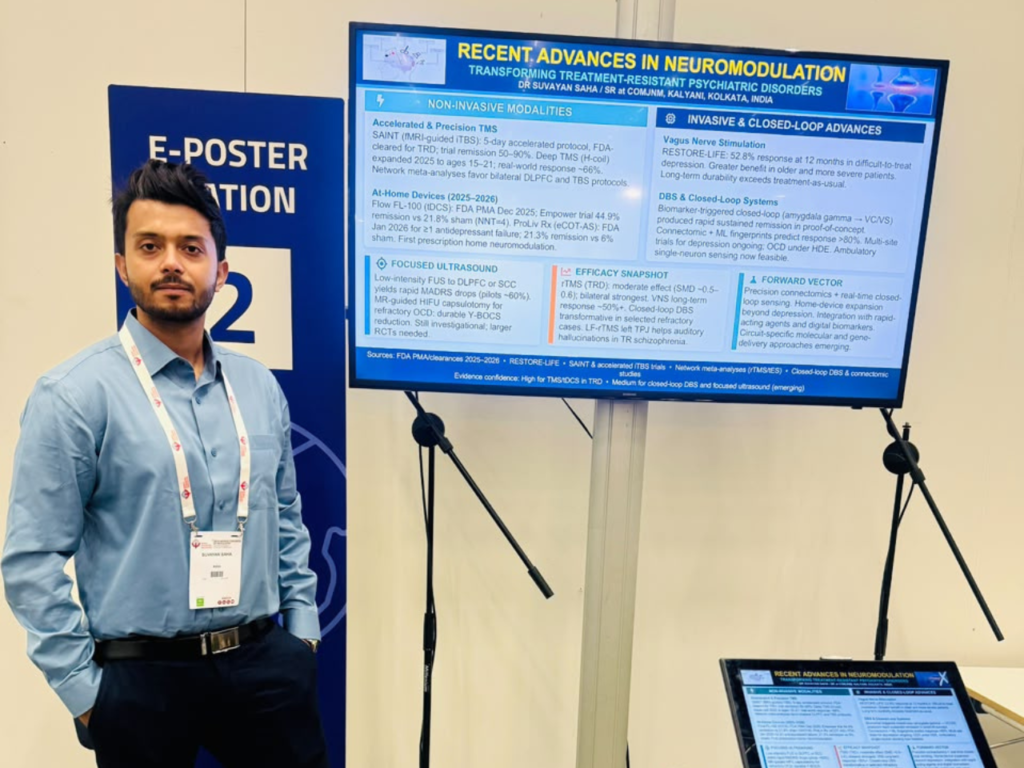
Mental health conditions can sometimes remain difficult to manage despite appropriate treatment. For individuals living with treatment-resistant psychiatric disorders, continued research into new treatment approaches is important for expanding clinical understanding and exploring additional care options. Neuromodulation has emerged as an important area of research in modern psychiatry, offering new perspectives on how brain activity may be influenced to support mental healthcare.
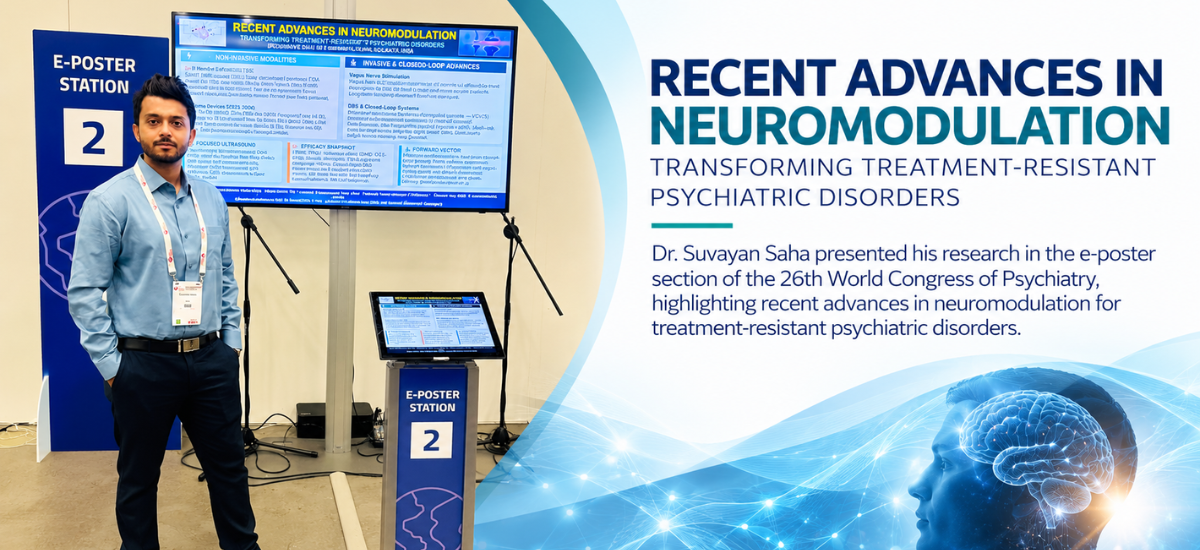
At the 26th World Congress of Psychiatry, held in Stockholm, Sweden, from 23 to 26 September 2026, Dr. Suvayan Saha presented an e-poster on “Recent Advances in Neuromodulation: Transforming Treatment-Resistant Psychiatric Disorders.” The presentation highlighted developments in neuromodulation and their potential relevance to psychiatric practice.
Understanding Neuromodulation
Neuromodulation refers to techniques that influence the activity of specific neural circuits or networks in the brain. These approaches are being studied for their role in managing certain psychiatric and neurological conditions. Depending on the technique, neuromodulation may involve non-invasive stimulation or procedures that use implanted devices.
In psychiatry, neuromodulation has attracted research interest because brain circuits play an important role in mood, thinking, behaviour and emotional regulation. Studying these circuits may help researchers better understand why some people respond differently to treatment and how alternative approaches might be considered when standard treatments have not provided sufficient benefit.
Understanding Treatment-Resistant Psychiatric Disorders
Some people experience persistent symptoms even after receiving appropriate treatment. The term treatment-resistant is used in specific clinical contexts when a condition has not responded adequately to suitable treatment approaches.
Managing these situations requires careful assessment. Factors such as the accuracy of diagnosis, other medical conditions, treatment adherence, medication effects and individual circumstances may need to be reviewed before considering further options.
Neuromodulation research contributes to this wider discussion by exploring approaches that may have a role in selected cases. However, suitability depends on the person’s condition, clinical history, available evidence and professional assessment. No single approach is appropriate for everyone.
The Importance of Evidence-Based Psychiatric Practice
Advances in neuromodulation highlight the need for continued scientific investigation, professional education and careful evaluation of treatment outcomes. Research presentations and academic discussions provide opportunities for healthcare professionals to examine emerging evidence, understand the limitations of existing studies and consider how new findings may inform clinical practice.
It is also important to distinguish promising research from established clinical recommendations. The effectiveness, safety, accessibility and long-term outcomes of different neuromodulation techniques can vary. Treatment decisions should therefore be based on reliable evidence and individual clinical needs.
Looking Ahead
Dr. Suvayan Saha’s e-poster presentation at the World Congress of Psychiatry reflects the continuing professional and academic interest in advances in psychiatric treatment. Such scientific exchanges help encourage discussion about evolving treatment approaches and the importance of patient-centred care.
As research progresses, neuromodulation may contribute to a broader understanding of treatment options for selected individuals with difficult-to-manage psychiatric conditions. The goal remains to support thoughtful, evidence-based care that considers each person’s symptoms, circumstances, preferences and overall wellbeing.