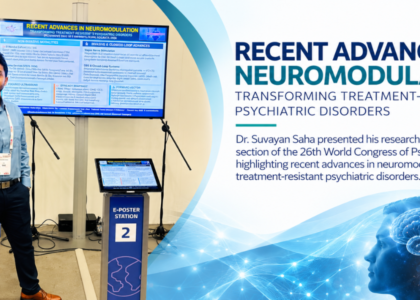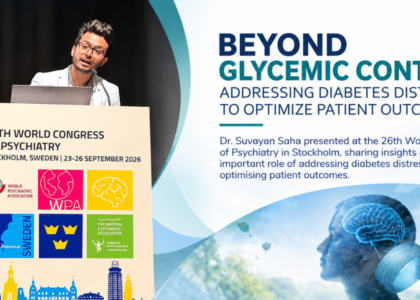
Global collaboration plays an important role in advancing psychiatric knowledge, encouraging scientific exchange, and improving the understanding of mental health. International conferences provide valuable opportunities for mental health professionals to connect, exchange ideas, and learn from diverse clinical and academic experiences.
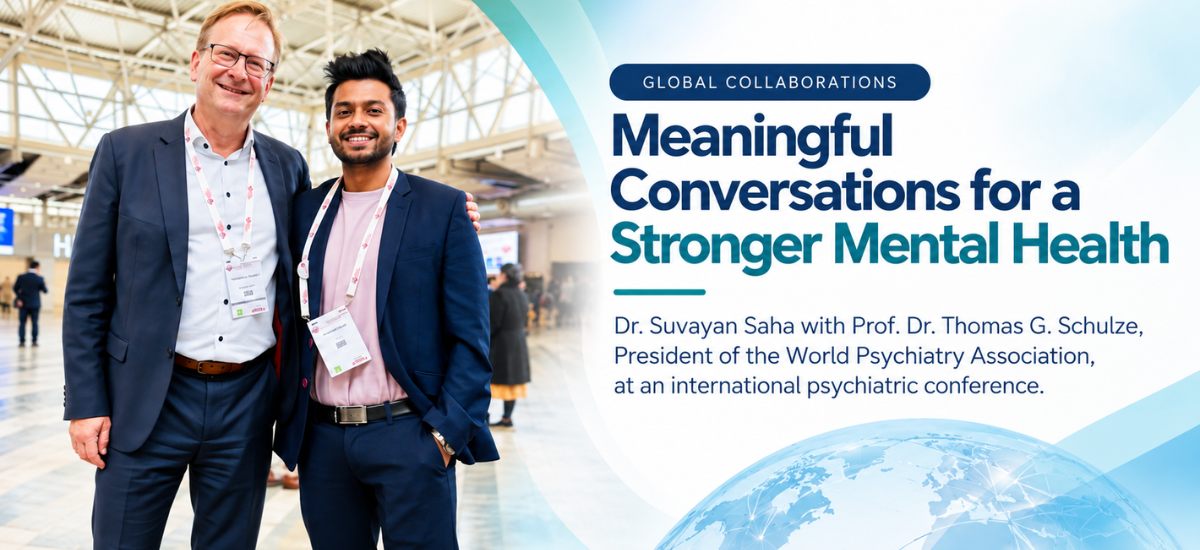
Dr. Suvayan Saha, Psychiatrist and Mental Health Specialist at Clinic Brain Neuropsychiatric Institute & Research Centre, had the opportunity to meet Prof. Dr. Thomas G. Schulze, President of the World Psychiatry Association, at an international psychiatric conference.
This interaction reflects the importance of professional dialogue and global knowledge-sharing in the field of psychiatry.
The Importance of International Collaboration in Psychiatry
Mental health challenges affect individuals, families, and communities across the world. Although the nature of these challenges may vary across cultures and healthcare systems, the need for accessible, evidence-based, and compassionate mental healthcare remains universal.
International psychiatric conferences bring together clinicians, researchers, educators, and other healthcare professionals to discuss developments in psychiatric practice, emerging research, and new approaches to mental health care.
These professional exchanges encourage participants to explore different perspectives, understand evolving scientific evidence, and reflect on how knowledge can be applied responsibly in clinical settings.
Learning Beyond Geographical Boundaries
Psychiatry continues to evolve through advances in neuroscience, psychopharmacology, psychological interventions, and technology-assisted approaches to treatment. Keeping up with these developments requires continuous learning and engagement with the wider medical community.
Interactions with professionals from different countries and academic backgrounds can broaden clinical perspectives and encourage meaningful discussions about the challenges faced by mental health practitioners.
Such opportunities also highlight the value of sharing research findings, discussing clinical experiences, and examining how evidence-based approaches can be adapted to different healthcare settings.
Professional Development Through Scientific Exchange
For psychiatrists and mental health professionals, participation in international academic activities is an important part of professional development. Conferences provide a platform to engage with current research, discuss complex clinical questions, and learn from the experiences of colleagues working in different healthcare environments.
These experiences support a culture of lifelong learning. They also reinforce the importance of critical thinking, ethical clinical practice, and staying informed about developments in psychiatric research.
For Dr. Suvayan Saha, professional interactions at international psychiatric gatherings represent an opportunity to remain engaged with the wider psychiatric community and continue learning from global perspectives.
Keeping Patient-Centred Care at the Core
While scientific progress and international collaboration are essential, the ultimate purpose of psychiatric research and professional learning is to support better mental healthcare.
Every individual experiences mental health concerns differently. Effective care requires attention to personal circumstances, clinical needs, social environment, and emotional wellbeing. Scientific knowledge must therefore be combined with empathy, careful assessment, and respect for each person’s experience.
Professional collaboration can contribute to this goal by encouraging the exchange of ideas and promoting thoughtful, evidence-informed approaches to patient care.
Conclusion
The meeting between Dr. Suvayan Saha and Prof. Dr. Thomas G. Schulze highlights the value of professional connections within the global psychiatric community. Such interactions represent the broader spirit of collaboration, continuous learning, and scientific dialogue that helps psychiatry move forward.
As mental healthcare continues to develop, collaboration among professionals across geographical and academic boundaries remains an important part of building a more informed, compassionate, and patient-centred approach to mental wellbeing.