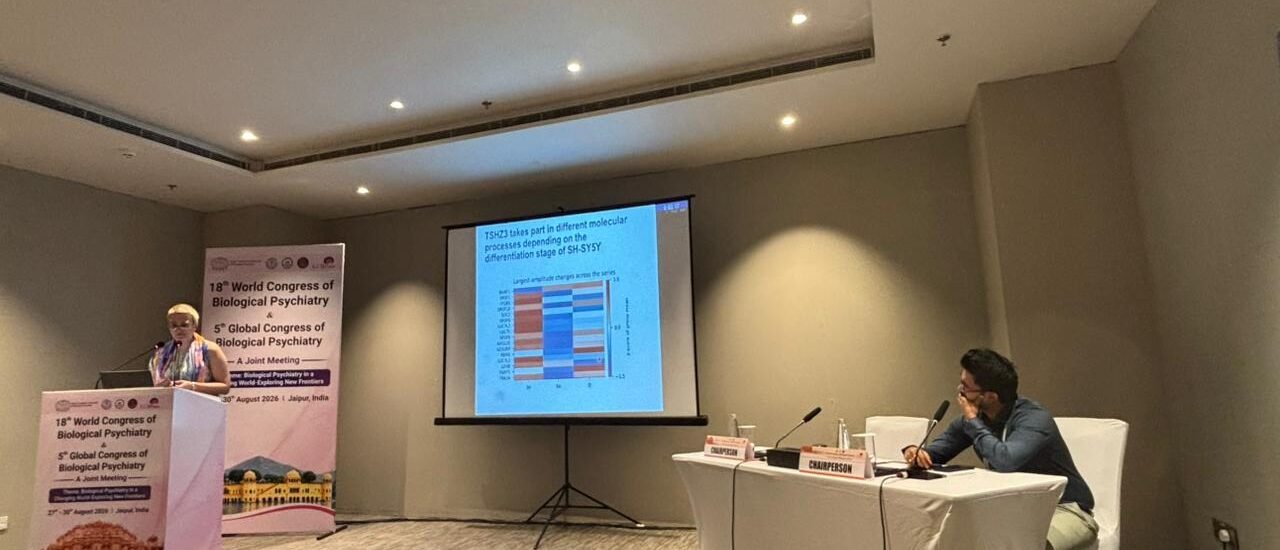
Dr. Suvayan Saha had the opportunity to chair a professional session at the 18th World Congress of Biological Psychiatry, a significant international platform bringing together clinicians, researchers and mental health professionals to discuss developments in biological psychiatry.
The session focused on three closely connected areas of modern psychiatric practice: prescribing, pharmacogenomics and real-world psychopharmacology. These areas are increasingly important as psychiatry continues to move towards more individualised and evidence-informed approaches to treatment.
Psychiatric prescribing involves much more than selecting a medication. Clinical assessment, diagnosis, previous treatment response, co-existing medical conditions, possible drug interactions, side effects and individual patient needs all play an important role in treatment decisions. A thoughtful prescribing approach aims to balance potential benefits with possible risks while ensuring appropriate clinical monitoring.
Pharmacogenomics adds another dimension to this process. It explores how genetic differences between individuals can influence their response to certain medicines. Although pharmacogenomic information does not replace clinical judgement, ongoing research in this field may contribute to a better understanding of variability in medication response and tolerability.
The discussion also highlighted the importance of real-world psychopharmacology. Findings from clinical trials provide valuable evidence, but everyday psychiatric practice involves patients with diverse backgrounds, multiple health conditions, different treatment histories and varying responses to medication. Translating scientific evidence into practical clinical decisions therefore requires careful consideration of the individual patient.
As psychiatry evolves, the integration of scientific knowledge with clinical experience remains essential. Advances in biological psychiatry, pharmacology and personalised medicine continue to create opportunities for more informed approaches to mental healthcare.
Chairing a session at an international scientific meeting also provides an opportunity to listen to different perspectives, engage with current research and exchange ideas with professionals working across the field. Such interactions contribute to continuous professional learning and encourage reflection on how emerging evidence can be considered in everyday psychiatric practice.
For Dr. Suvayan Saha, participation in the 18th World Congress of Biological Psychiatry represents another step in continued academic engagement and professional development. Conferences such as these provide an important space for learning, discussion and collaboration, helping mental health professionals remain connected with developments in contemporary psychiatry.
The focus ultimately remains on responsible, evidence-informed and individualised mental healthcare, where scientific advances are considered thoughtfully alongside clinical assessment and the needs of each person.