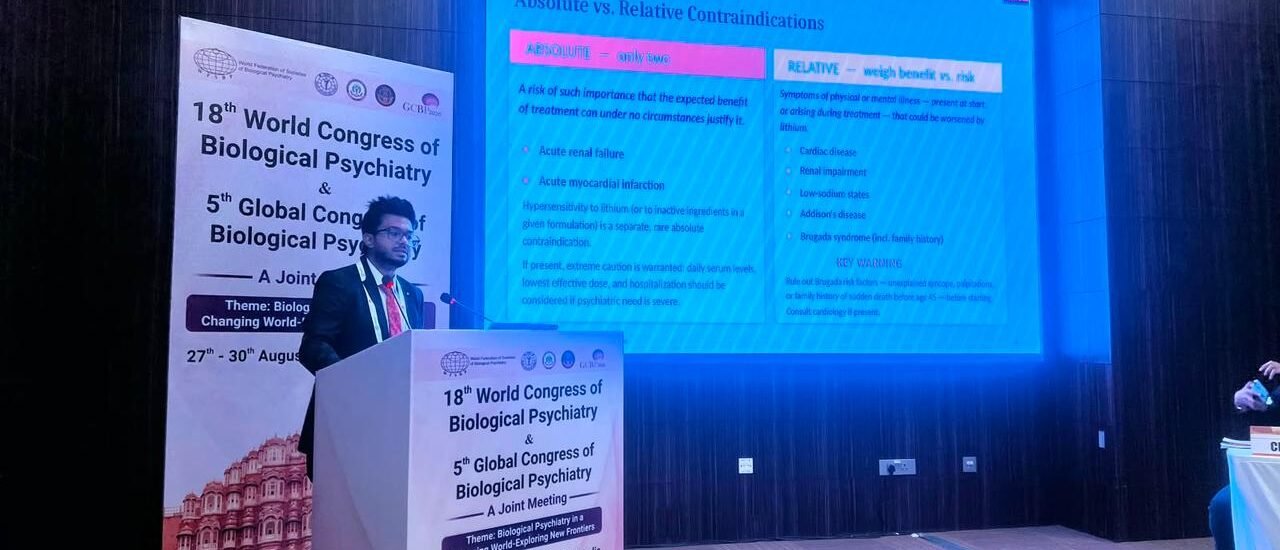
Lithium has remained an important medication in psychiatric practice for decades, particularly in the management of mood disorders. However, its clinical use requires careful assessment, appropriate monitoring and a clear understanding of factors that may affect safety. These important aspects were explored by Dr. Suvayan Saha through his presentation on “Lithium Mastery” at the 18th World Congress of Biological Psychiatry, held in Jaipur from 27th to 30th August 2026.
The presentation focused on practical considerations involved in prescribing lithium and highlighted the importance of understanding contraindications and potential risks before treatment is initiated. The discussion included the distinction between absolute and relative contraindications, helping clinicians approach lithium prescribing with greater clinical awareness.
One of the key areas highlighted was the relationship between lithium therapy and different organ systems. Renal health is particularly important because lithium is primarily cleared through the kidneys. The presentation addressed situations involving renal impairment and the need for careful clinical consideration. Cardiovascular, neurological, endocrine, haematological and other medical factors may also influence decisions around lithium treatment.
Another important aspect of lithium use is monitoring. Safe prescribing is not limited to selecting an appropriate medication and dose. Clinicians need to consider the individual patient’s medical history, concurrent medications, physical health, laboratory findings and other relevant risk factors. Ongoing clinical assessment can help identify concerns early and support appropriate treatment decisions.
The session also emphasised the importance of recognising potential drug interactions and changes in physical health that may influence lithium levels or tolerability. This highlights why lithium treatment should be approached as an ongoing process rather than a one-time prescribing decision.
Academic platforms such as the World Congress of Biological Psychiatry provide an opportunity for psychiatrists and other mental health professionals to exchange knowledge, discuss emerging evidence and reflect on practical challenges in clinical care. Sessions focused on established treatments such as lithium are particularly valuable because they connect scientific knowledge with everyday clinical decision-making.
For patients, this careful approach means that treatment decisions can be individualised rather than based on a single factor. Lithium may be an appropriate option for some patients, while others may require alternative approaches depending on their medical circumstances. Any decision regarding lithium should therefore be made by a qualified healthcare professional after appropriate assessment.
Dr. Suvayan Saha’s participation in this academic programme reflects the importance of continued professional learning in psychiatry. Staying updated on prescribing principles, safety considerations and evidence-based practice supports thoughtful clinical care. “Lithium Mastery” was therefore not simply about understanding a medication. It was about strengthening the knowledge, awareness and clinical judgement required to use established psychiatric treatments responsibly and safely.