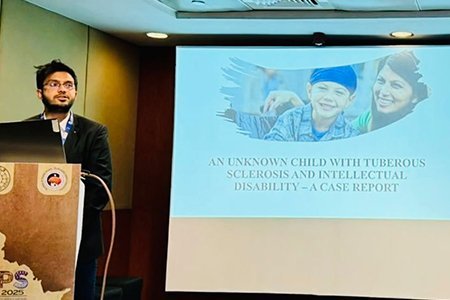
The 77th Annual National Conference of the Indian Psychiatric Society (ANCIPS 2025) served as an important platform for psychiatrists, researchers and mental health professionals to exchange knowledge and discuss evolving concepts in mental healthcare. Among the many academic sessions, the presentation of a unique clinical case titled “An Unknown Child with Tuberous Sclerosis and Intellectual Disability” highlighted the significance of careful clinical evaluation, interdisciplinary collaboration and early intervention in psychiatry.
Case reports have always played a vital role in medical education. They provide an opportunity to share rare clinical experiences, improve diagnostic understanding and encourage discussions that contribute to better patient care. Presenting complex cases at national conferences allows healthcare professionals to learn from real-world situations and explore how evidence-based approaches can be applied in everyday clinical practice.
The case presented at ANCIPS 2025 focused on a child diagnosed with Tuberous Sclerosis Complex (TSC), a rare genetic disorder that can affect multiple organs, including the brain, skin, kidneys and heart. Children with TSC may experience a variety of neurological and developmental challenges, such as epilepsy, intellectual disability, behavioural concerns and difficulties in social functioning. Because symptoms often vary from person to person, timely identification and comprehensive assessment become extremely important.
This presentation emphasized the need for a multidisciplinary approach in managing neurodevelopmental disorders. Psychiatrists, neurologists, paediatricians, psychologists, occupational therapists, speech therapists and educators often work together to create individualized care plans that support the child’s development and improve quality of life.
One of the key messages from the presentation was the importance of early diagnosis. Recognizing developmental delays, behavioural changes or learning difficulties at an early stage can lead to timely intervention, better support systems and improved long-term outcomes. Families also benefit from appropriate guidance, counselling and psychoeducation, which help them understand the condition and participate actively in the child’s care.
Participation in academic conferences such as ANCIPS allows mental health professionals to remain updated with emerging knowledge and advances in clinical practice. Presenting rare cases contributes to collective learning and strengthens the scientific understanding of complex psychiatric and neurodevelopmental conditions.
For Dr. Suvayan Saha, presenting this case at ANCIPS 2025 represented an important academic milestone and reflected a commitment to research, education and evidence-based mental healthcare. Sharing clinical experiences at national forums helps bridge the gap between medical knowledge and practical patient care, ultimately benefiting individuals and families seeking support.
The experience also reinforced an important principle in psychiatry: every patient has a unique story, and careful observation, compassion and scientific understanding are essential in delivering meaningful care. Through continuous learning and academic engagement, mental health professionals can contribute to advancing the field while improving outcomes for patients with complex and challenging conditions.
Conferences like ANCIPS continue to inspire collaboration, innovation and deeper understanding, ensuring that mental healthcare evolves to meet the changing needs of society.