Movement disorders are an important area of clinical interest for psychiatrists because changes in movement can sometimes be associated with psychiatric, neurological or other medical conditions. Recognising these patterns requires careful clinical observation and a clear understanding of movement phenomenology.
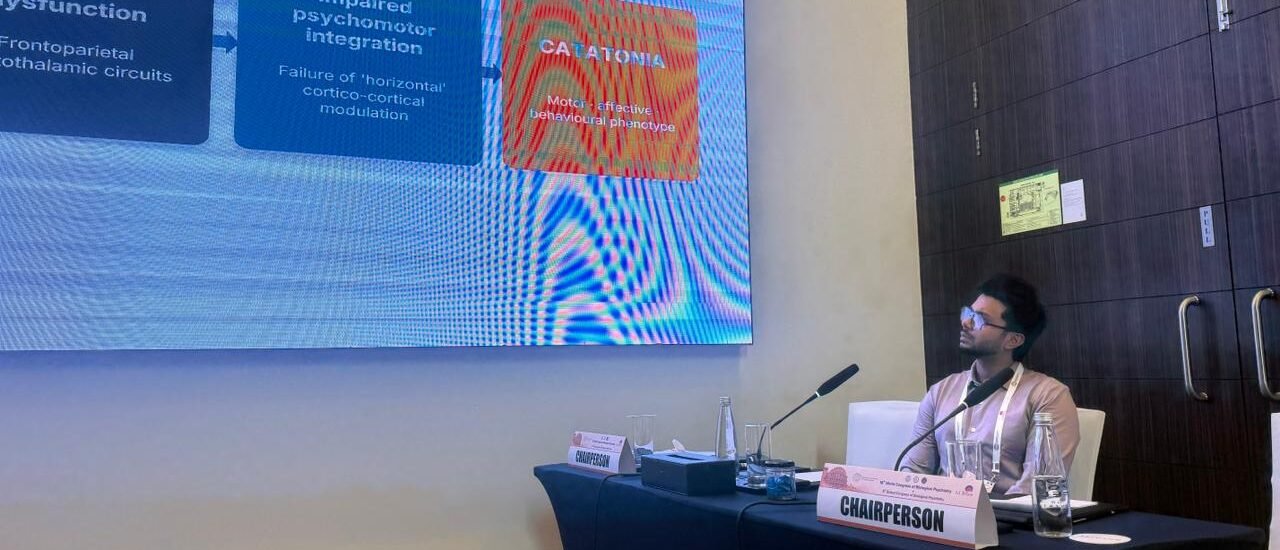
Dr. Suvayan Saha chaired a session on “Movement Disorders – Phenomenology for Psychiatrists” at the 18th World Congress of Biological Psychiatry in Jaipur. The session provided an opportunity to discuss the importance of recognising movement-related clinical features and understanding their relevance in psychiatric practice.
Phenomenology refers to the systematic description and observation of clinical signs. In the context of movement disorders, this involves paying attention to how a movement appears, when it occurs, how it changes and how it relates to the individual’s overall clinical presentation.
For psychiatrists, familiarity with movement phenomenology can be particularly useful when assessing patients who present with unusual movements, changes in motor activity or behavioural symptoms. Some movement-related features may also be relevant when considering the effects of medications or when distinguishing between different clinical presentations.
A careful clinical assessment remains central. Observation of posture, gait, facial movements, muscle activity and other motor behaviours can provide useful information. The pattern, timing and context of a movement may help clinicians decide whether further assessment or specialist input is appropriate.
The relationship between psychiatry and neurology is especially important in this area. Some clinical presentations may involve overlapping psychiatric and neurological features. Collaboration between professionals can therefore support a broader understanding of complex cases and help ensure that relevant clinical factors are considered.
The session also highlighted the value of continuing professional education. Medical knowledge continues to develop, and academic conferences provide an opportunity for clinicians to discuss clinical concepts, share experiences and learn from professionals working across different areas of healthcare.
Understanding movement disorders does not mean assuming that every unusual movement has a neurological or psychiatric cause. Instead, it encourages a thoughtful approach in which clinical signs are considered within the individual’s complete history and examination.
For Dr. Suvayan Saha, chairing this academic session represents continued involvement in professional learning and the exchange of knowledge within biological psychiatry. Discussions on topics such as movement phenomenology can contribute to greater clinical awareness and encourage collaboration across specialties.
A deeper understanding of movement-related signs can support more structured clinical observation and help clinicians recognise when additional evaluation may be useful. It also reinforces the importance of looking at mental health within the wider context of physical and neurological wellbeing.
Academic engagement plays an important role in maintaining and developing clinical knowledge. Sessions such as “Movement Disorders – Phenomenology for Psychiatrists” contribute to this process by bringing attention to clinical features that may otherwise be overlooked.
As psychiatry continues to evolve, interdisciplinary understanding remains valuable. Combining careful observation, clinical reasoning, appropriate assessment and collaboration can support a more comprehensive approach to mental healthcare.