Psychiatry is an evolving field, shaped by advances in neuroscience, pharmacology and our growing understanding of the brain. One area receiving increasing scientific attention is the study of psychedelics and their possible implications for mental healthcare.
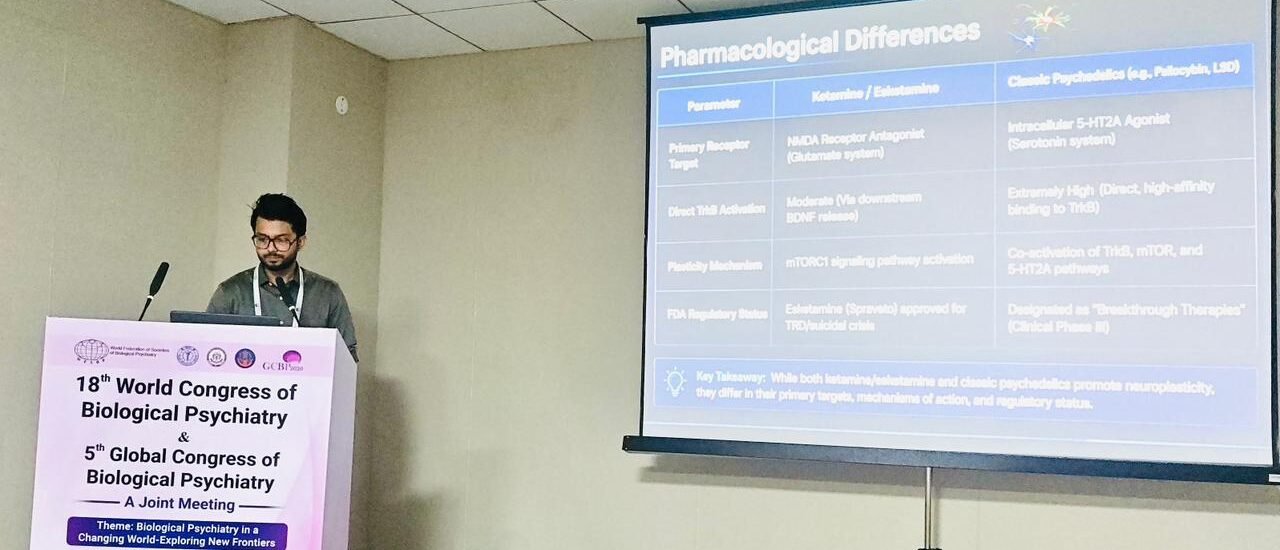
Dr. Suvayan Saha presented on “Psychedelics & Its Implications in Psychiatry” at the 18th World Congress of Biological Psychiatry in Jaipur. The presentation provided an opportunity to discuss emerging research and consider how developments in this field may influence the future understanding of psychiatric disorders.
Research into psychedelic substances has generated interest because of their effects on brain function, perception, cognition and emotional processing. Scientific discussions have also explored their relationship with neuroplasticity and the mechanisms through which certain substances may influence neural pathways.
An important part of understanding psychedelics is recognising that different substances can have significantly different pharmacological profiles. Their mechanisms of action, clinical evidence, regulatory status and potential risks may vary. For this reason, broad conclusions about psychedelics as a single category can be misleading.
The presentation also highlighted the importance of distinguishing established evidence from emerging research. While some areas of psychedelic research have produced promising findings, the evidence base continues to develop. Further research is needed to understand appropriate clinical applications, patient selection, safety considerations and long-term outcomes.
Ketamine and esketamine are examples of treatments that have received significant attention in psychiatry because of their distinct pharmacological mechanisms and clinical applications. Their relationship with glutamatergic pathways and neuroplasticity has contributed to ongoing scientific interest. However, these treatments should be considered within appropriate clinical and regulatory frameworks.
Classic psychedelics, including substances such as psilocybin and LSD, are also being studied for their potential role in psychiatric research. Their mechanisms and regulatory status differ from those of ketamine and esketamine, making careful scientific evaluation particularly important.
The discussion of psychedelics in psychiatry is therefore not simply about identifying new treatments. It also involves understanding biology, neuroscience, pharmacology, ethics, safety and the quality of available evidence. Responsible research and informed clinical discussion are essential as this field develops.
Scientific conferences provide an important platform for such discussions. They allow psychiatrists and researchers to exchange knowledge, examine emerging findings and consider how new developments may fit within contemporary psychiatric practice.
For Dr. Suvayan Saha, presenting on psychedelics and their implications represents continued academic engagement with emerging areas of biological psychiatry. Participation in professional forums encourages ongoing learning and helps clinicians remain connected with developments in psychiatric science.
As research progresses, psychedelics may continue to be an important subject of scientific investigation. Their future role in psychiatry will depend on the quality of evidence, appropriate clinical evaluation, safety, ethical considerations and continued research.
A balanced approach is essential. Emerging developments should be explored with scientific curiosity while maintaining careful attention to evidence and responsible mental healthcare.