
Psychiatry continues to evolve as our understanding of the brain, behaviour and mental health becomes more detailed. Advances in biology, neuroscience, genetics and technology are helping mental health professionals develop a deeper understanding of psychiatric disorders and explore new approaches to assessment and treatment.
Dr. Suvayan Saha had the opportunity to share a meaningful academic exchange with Dr. Prof. Peter Falkai, discussing how developments in these areas have influenced contemporary psychiatric practice. Such interactions provide valuable opportunities for clinicians to exchange perspectives and reflect on the changing landscape of mental healthcare.
Biological research has contributed significantly to our understanding of psychiatric disorders. Studying brain function, neurobiology and biological processes can provide insights into the complex factors associated with mental health conditions. However, psychiatric disorders are multifaceted, and biological factors are considered alongside psychological, social and environmental factors during clinical assessment.
Neuroscience has also expanded our understanding of how the brain influences thoughts, emotions, behaviour and cognition. Developments in neuroscience continue to inform research into psychiatric conditions and help clinicians better understand the relationship between brain function and mental health.
Genetics represents another important area of progress. Research into genetic factors has shown that vulnerability to many psychiatric conditions can involve complex interactions between multiple genetic and environmental influences. Pharmacogenomics is also an emerging area of interest, exploring how genetic differences may influence an individual’s response to certain medications. These developments may contribute to more individualised approaches in the future, while clinical judgement remains essential.
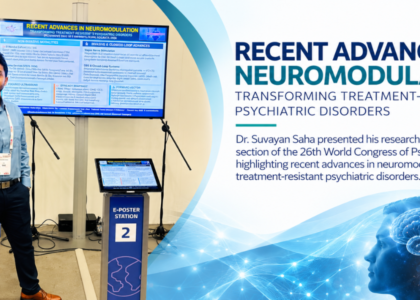
Technology is bringing additional possibilities to psychiatry. Advances in digital tools, brain research, diagnostic approaches and neuromodulation are contributing to ongoing research and clinical discussion. As these technologies develop, careful evaluation of their usefulness, safety and appropriate application remains important.
The discussion with Dr. Prof. Peter Falkai also reflects the value of academic collaboration in psychiatry. Conversations between professionals from different backgrounds can encourage the exchange of ideas, broaden perspectives and support continued learning.
Modern psychiatry is not defined by one single approach. Instead, it continues to develop through the integration of scientific research, clinical experience and an understanding of each individual’s circumstances. Advances in biology, neuroscience, genetics and technology can contribute to this progress when applied thoughtfully and supported by appropriate evidence.
For Dr. Suvayan Saha, such academic interactions are an important part of continued professional development. Staying engaged with developments in psychiatric science helps clinicians remain connected with emerging knowledge and encourages ongoing reflection on responsible, evidence-informed mental healthcare.