Advances in neuroscience and psychiatry are creating new possibilities for understanding and supporting people living with cognitive difficulties. Neuromodulation is one area receiving growing attention, particularly for its potential role in addressing cognitive changes associated with conditions such as dementia. Academic conferences provide an important platform for discussing these developments and bringing clinicians and researchers together.
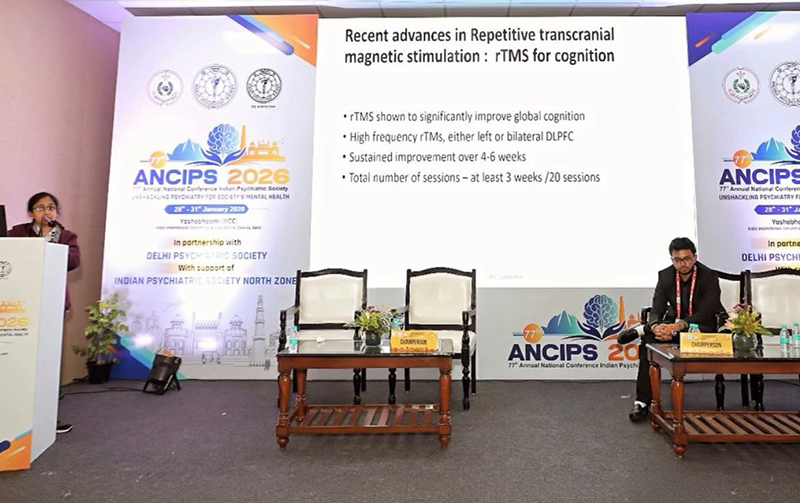
Dr. Suvayan Saha chaired a session at ANCIPS 2026 focused on “Recent Advances & Neuromodulation Techniques in the Treatment of Dementia.” The session brought attention to emerging approaches in neuromodulation and the ongoing research exploring their possible applications in cognitive health.
One of the topics highlighted during the session was repetitive transcranial magnetic stimulation, commonly known as rTMS. It is a non-invasive brain stimulation technique that uses magnetic pulses to influence activity in specific areas of the brain. Research into rTMS continues to explore its potential effects on different aspects of cognition and mental health.
The presentation featured discussion around recent advances in rTMS for cognition, including research on high-frequency stimulation and its potential impact on global cognitive functioning. The material presented also highlighted the importance of considering factors such as stimulation location, treatment duration and the number of sessions when studying these approaches.
Dementia is a complex group of conditions that can affect memory, thinking, behaviour and everyday functioning. As research continues, understanding the biological processes behind cognitive changes remains an important part of improving care. Neuromodulation research represents one area where neuroscience and clinical psychiatry intersect, creating opportunities for further study and innovation.
Chairing an academic session is also an opportunity to encourage meaningful discussion among professionals. It allows experts to share research findings, clinical experiences and different perspectives while examining how emerging evidence may contribute to future practice. Such discussions are particularly valuable in rapidly developing areas of mental healthcare.
ANCIPS 2026 provided a platform for these important conversations, bringing together professionals interested in the latest developments in psychiatry. Dr. Suvayan Saha’s role as session chair reflects his involvement in academic and professional discussions surrounding contemporary psychiatric care and emerging treatment approaches.
It is important to remember that newer techniques and research findings require careful evaluation. Continued research, scientific discussion and evidence-based clinical practice remain essential before any emerging approach can be considered broadly applicable.
The session on neuromodulation and dementia highlighted an important direction in modern psychiatry: combining advances in neuroscience with thoughtful clinical practice. As research progresses, continued collaboration among psychiatrists, researchers and other healthcare professionals can help deepen our understanding of cognitive health and contribute to better-informed approaches to care.
Through participation in academic platforms such as ANCIPS 2026, Dr. Suvayan Saha continues to engage with evolving developments in psychiatry and contribute to professional conversations that shape the future of mental healthcare.